
Softphone in
Healthcare
Softphone in Healthcare
When the smartphone replaces the traditional telephone
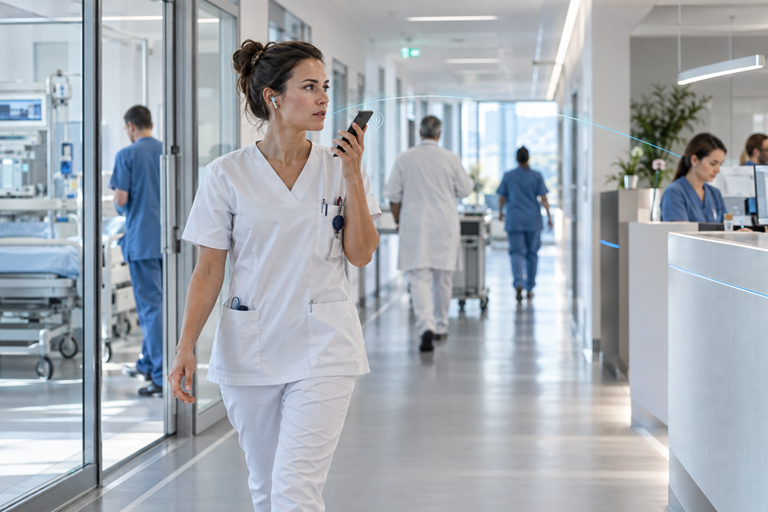
Communication in healthcare must function quickly and reliably. With modern softphone solutions, smartphones can increasingly supplement or replace traditional DECT or desk phones.
Employees can be reached via their business number and can combine communication and digital work processes on a single device.
However, the introduction of a softphone involves much more than just telephony. For the smartphone to function reliably in everyday clinical practice, device management, identity, app configuration, security, and operations must work together.
The challenge for IT
When the smartphone becomes a communication device, additional requirements for the mobile infrastructure arise. The softphone solution must be securely deployed, correctly configured, and integrated into existing identity, security, and support processes.
Securely deploy the app
Distribute the softphone app and required configurations to the correct devices in a controlled manner.
Authenticate users
Ensure that the correct person can log in uniquely and use the intended communication services.
Provide business contacts
Business contacts must be available on the mobile work device in an up-to-date and secure manner.
Maintain clear separation of use
Private and business use must remain clearly separated from each other, depending on the device model.
Control access
In the event of device loss or employee departure, business access must be reliably revocable.
Keep operations scalable
Configuration, device replacement, and support must function reliably even with a large number of mobile devices.
The solution: Softphone as part of the endpoint strategy
A softphone solution should not be viewed as an isolated telephony app, but as a component of a secure mobile endpoint strategy.
Device management, identity, app configuration, security, and telephony are all interconnected. Applications and settings can be deployed centrally, users can be uniquely authenticated, and business access can be controlled according to the organization’s requirements.
In this way, the smartphone becomes an integrated tool for mobile employees – with communication and digital work processes on one device.
Softphones in everyday hospital life
Employees can be reached via smartphone at their business number and simultaneously access the mobile applications required for their role. Telephony and digital work processes are thus combined on one device.
Identity & SSO
Secure login and unique user reference
UEM / MDM
Centrally manage and securely configure devices
Mobile work device
Securely integrated and centrally managed
Softphone & Configuration
Deploy the app and required settings in a controlled manner
Business Contacts
Securely provide relevant contacts on the device
RESULT
Mobile communication in the hospital
Employees are reachable via their business number and can combine communication and digital work processes on one device
How Nomasis supports you
Nomasis supports healthcare organizations in the secure integration of softphone solutions into existing UEM/MDM, identity, and security infrastructures – from technical conception to reliable operation.
In doing so, we consider not only the telephony app, but the interaction of device, user identity, configuration, contacts, and lifecycle.
UEM / MDM Integration
Centrally integrate and manage devices, softphone solutions, and configurations
App & Configuration
Deploy the softphone app and required settings in a controlled manner.
Identity & Single Sign-On
Integrate authentication and SSO into existing identity processes.
Business Contacts
Securely provide relevant contacts on the intended devices.
Lifecycle & Support
Accompany devices, apps, and configurations throughout the entire lifecycle